
BLOG
Maintenance Tips for Scroll Air Compressors: A Complete Guide to Reliability, Efficiency, and Long Service Life

News

Contact us
Maintenance Tips for Scroll Air Compressors: A Complete Guide to Reliability, Efficiency, and Long Service Life
Scroll air compressors have become an essential part of modern industrial systems due to their oil-free operation, low noise, high efficiency, and compact structure. They are widely used in industries such as medical care, electronics manufacturing, laboratories, food processing, and precision automation.
However, even though scroll compressors are known for their low maintenance requirements, they still need proper care to ensure long-term performance and avoid unexpected downtime. Without correct maintenance, even the most advanced scroll air compressor can experience reduced efficiency, increased energy consumption, or premature wear.
This article provides a comprehensive, professional guide on maintenance tips for scroll air compressors, covering daily checks, preventive maintenance, troubleshooting strategies, and long-term care practices to maximize equipment lifespan and performance.
1. Why Maintenance Matters for Scroll Air Compressors
Many users mistakenly assume that scroll air compressors are “maintenance-free.” While it is true that they require less maintenance than piston or screw compressors, they are not completely maintenance-free.
Proper maintenance ensures:
-
Stable air output pressure
-
Long service life of scroll elements
-
Reduced energy consumption
-
Lower risk of unexpected breakdowns
-
Consistent air quality (especially for oil-free systems)
Neglecting maintenance can lead to:
-
Reduced compression efficiency
-
Overheating issues
-
Increased wear on scroll plates
-
Contamination in air systems
-
Higher operating costs
In industrial environments where compressed air is critical, even small failures can lead to production delays and financial losses.
2. Understanding the Structure of a Scroll Air Compressor
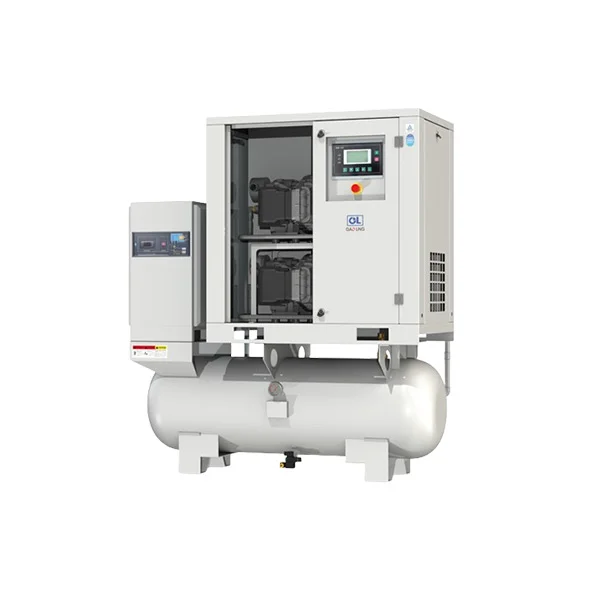
To properly maintain a scroll air compressor, it is important to understand its core structure:
-
Fixed scroll: stationary spiral component
-
Orbiting scroll: moving spiral that compresses air
-
Motor (often PM motor): drives the orbiting motion
-
Air intake system: filters incoming air
-
Cooling system: manages heat generated during compression
-
Control system: regulates pressure and operation
Each of these components plays a role in system stability and must be properly maintained.
3. Daily Maintenance Tips for Scroll Air Compressors
Daily maintenance is simple but extremely important. These quick checks help detect problems early.
3.1 Check Operating Pressure
Ensure the compressor is operating within the recommended pressure range. Abnormal pressure may indicate:
-
Air leaks
-
Blocked filters
-
Control system malfunction
Stable pressure ensures consistent performance.
3.2 Monitor Noise and Vibration
Although scroll compressors are naturally quiet, sudden changes in noise or vibration may signal:
-
Mechanical imbalance
-
Bearing wear
-
Foreign particles inside the system
Any unusual sound should be investigated immediately.
3.3 Inspect Air Intake Quality
The compressor depends heavily on clean intake air. Check:
-
Air filter condition
-
Dust accumulation
-
Blockages in intake vents
Dirty intake air reduces efficiency and increases internal wear.
3.4 Check Temperature Levels
Overheating is one of the most common issues in compressors. Ensure:
-
Cooling fans are working
-
Ventilation is not blocked
-
Ambient temperature is within limits
High temperature reduces the lifespan of scroll components.
4. Weekly Maintenance Practices
Weekly inspections are more detailed and help maintain long-term stability.
4.1 Clean or Replace Air Filters
Air filters prevent dust and particles from entering the system. If clogged, they can:
-
Reduce airflow
-
Increase energy consumption
-
Cause overheating
Depending on environment conditions, filters should be cleaned or replaced regularly.
4.2 Check Electrical Connections
Loose or damaged electrical connections can cause:
-
Power fluctuations
-
Motor inefficiency
-
System shutdowns
Ensure all wiring is secure and free from corrosion.
4.3 Inspect Cooling System
Scroll compressors rely on efficient cooling. Check:
-
Cooling fan operation
-
Airflow passages
-
Dust buildup on cooling surfaces
Proper cooling ensures stable compression performance.
5. Monthly Maintenance Checklist
Monthly maintenance is more technical and ensures system stability.
5.1 Examine Scroll Elements
Although scroll components are designed for durability, they should still be inspected for:
-
Wear patterns
-
Surface damage
-
Foreign particle impact
Early detection prevents major system failure.
5.2 Check Air Dryer and Filters (if integrated system)
Many modern systems include an all-in-one scroll air compressor system with dryers and filters. Ensure:
-
Dryer performance is stable
-
Moisture removal is effective
-
Filter pressure drop is normal
Moisture in compressed air can damage downstream equipment.
5.3 Test Safety and Control Systems
Verify:
-
Pressure sensors
-
Automatic shutdown systems
-
Alarm functions
These systems protect the compressor from abnormal operation.
6. Quarterly and Long-Term Maintenance
Long-term maintenance ensures the compressor continues to perform efficiently over years.
6.1 Motor Inspection (PM Motor Systems)
Many scroll compressors use permanent magnet motors. Check:
-
Motor temperature
-
Bearing condition
-
Electrical efficiency
A well-maintained motor improves energy efficiency significantly.
6.2 System Calibration
Ensure control systems are properly calibrated:
-
Pressure settings
-
Load/unload cycles
-
Automatic control logic
Incorrect calibration can lead to unnecessary energy consumption.
6.3 Full System Cleaning
Dust accumulation inside the unit can reduce heat dissipation. A full cleaning should include:
-
Internal housing
-
Cooling fins
-
Electrical compartments
7. Common Problems and How to Fix Them
Even with proper maintenance, issues may occur.
7.1 Reduced Air Output
Possible causes:
-
Clogged air filters
-
Worn scroll elements
-
Air leakage
Solution:
-
Replace filters
-
Inspect scroll assembly
-
Check sealing system
7.2 Excessive Noise
Although rare in scroll compressors, it may be caused by:
-
Bearing wear
-
Loose components
-
Foreign objects
Solution:
-
Tighten connections
-
Inspect internal components
-
Remove contaminants
7.3 Overheating
Possible reasons:
-
Poor ventilation
-
Dirty cooling system
-
Continuous overload
Solution:
-
Improve airflow
-
Clean cooling system
-
Reduce load conditions
7.4 Frequent Shutdowns
May indicate:
-
Electrical instability
-
Sensor malfunction
-
Control system error
Solution:
-
Check electrical system
-
Reset controller
-
Replace faulty sensors
8. Best Practices to Extend Service Life
Proper usage is as important as maintenance.
8.1 Avoid Overloading the System
Operating beyond rated capacity reduces lifespan.
8.2 Maintain Stable Operating Environment
Ideal conditions:
-
Clean air environment
-
Stable temperature
-
Low humidity
8.3 Use High-Quality Replacement Parts
Always use manufacturer-approved:
-
Filters
-
Sensors
-
Electrical components
8.4 Schedule Preventive Maintenance
Do not wait for failure. A preventive maintenance schedule reduces downtime and cost.
9. Maintenance Differences: Scroll vs Other Compressors
Scroll Compressor Advantages:
-
Fewer moving parts
-
Lower maintenance frequency
-
No oil system required
-
Longer stable operation cycles
Compared to Piston Compressors:
-
Less vibration
-
Less wear
-
Lower servicing needs
Compared to Screw Compressors:
-
Simpler structure
-
Easier inspection
-
Lower maintenance complexity
10. Why Proper Maintenance Improves Energy Efficiency
A well-maintained scroll air compressor can significantly reduce energy consumption.
Clean filters, stable temperature, and optimized control systems lead to:
-
Lower motor load
-
Reduced power consumption
-
Higher compression efficiency
In industrial operations, even a small efficiency improvement can result in substantial cost savings over time.
11. Maintenance in Special Industries
11.1 Medical Industry
Requires:
-
Strict air purity
-
Zero contamination risk
-
Regular filter replacement
11.2 Electronics Manufacturing
Requires:
-
Stable pressure
-
Cleanroom compatibility
-
Dust-free operation
11.3 Food and Beverage Industry
Requires:
-
Oil-free assurance
-
Hygienic maintenance practices
-
Frequent air quality checks
Conclusion
Although a scroll air compressor is known for its reliability and low maintenance design, proper maintenance is still essential to ensure long-term performance, energy efficiency, and stable air quality.
By following a structured maintenance plan—covering daily checks, weekly inspections, monthly servicing, and long-term preventive care—users can significantly extend equipment lifespan and reduce operating costs.
In modern industrial environments where efficiency and reliability are critical, a well-maintained scroll air compressor is not just a piece of equipment—it is a long-term productivity asset.


