
BLOG
What Are the Benefits of Using a Silent Oil-Free Air Compressor?

News

Contact us
What Are the Benefits of Using a Silent Oil-Free Air Compressor?
Compressed air is widely used in workshops, laboratories, medical equipment, packaging lines, electronics manufacturing, food processing, and many other applications. While conventional compressors can provide the required airflow and pressure, noise, oil contamination, maintenance, and operating conditions may become important concerns, particularly when compressed air equipment operates close to people or sensitive processes.
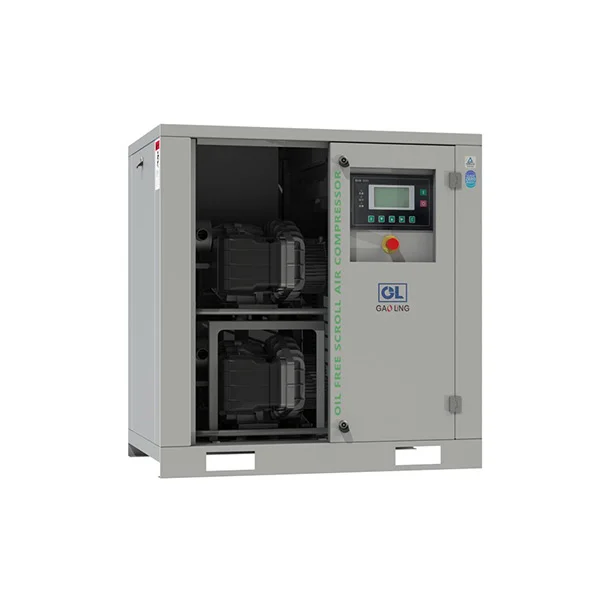
A silent oil-free air compressor is designed to address several of these concerns at the same time. It combines an oil-free compression system with noise-reduction features, providing compressed air without oil introduced through the compression chamber while keeping operating sound at a relatively low level.
For businesses choosing an air compressor for an indoor production area, laboratory, dental clinic, workshop, or other noise-sensitive environment, understanding the practical benefits of this equipment can make the selection process much easier.
What Is a Silent Oil-Free Air Compressor?
A low-noise oil-free air compressor is a compressor designed to produce compressed air without using lubricating oil in the compression chamber and with additional measures to reduce operating noise.
In a conventional oil-lubricated compressor, oil may be used to lubricate and cool moving components inside the compression mechanism. Although filtration systems can reduce oil carryover, the possibility of oil contamination remains part of the system design.
An oil-free compressor takes a different approach. Depending on the compressor type, specially engineered materials, coatings, bearings, sealing structures, or other design methods are used to allow the compression mechanism to operate without oil inside the compression chamber.
The “silent” or low-noise aspect generally comes from a combination of motor design, vibration control, acoustic enclosures, optimized airflow paths, and mechanical construction. It does not mean that the compressor produces zero sound. Instead, the objective is to significantly reduce the noise generated during operation.
This combination makes a silent oil-free compressor particularly useful where both clean compressed air and a comfortable acoustic environment are important.
1. Cleaner Compressed Air
One of the main benefits of an oil-free compressor is the reduction of oil-related contamination.
In applications where compressed air comes into direct or indirect contact with products, equipment, instruments, or sensitive processes, controlling contamination can be important. An oil-free design eliminates the need to introduce lubricating oil into the compression chamber, reducing the risk of oil entering the compressed-air stream from the compression process.
This can be particularly valuable in applications such as:
-
Medical and dental equipment
-
Laboratory instruments
-
Electronics manufacturing
-
Food and beverage processing
-
Pharmaceutical production
-
Painting and coating systems
-
Textile equipment
-
Precision pneumatic equipment
However, “oil-free” should not automatically be interpreted as meaning that the entire compressed-air system is contamination-free. Air entering the compressor can contain dust, moisture, hydrocarbons, and other contaminants from the surrounding environment. Downstream filtration, air treatment, drainage, and proper installation may still be required depending on the application.
Therefore, when selecting an oil-free air compressor, buyers should consider the complete air treatment system rather than looking at the compressor alone.
2. Lower Noise in Indoor Working Areas
Noise is another major reason companies consider a silent oil-free air compressor.
Compressors can produce sound from several sources, including the motor, compression mechanism, cooling fan, airflow, vibration, and mechanical movement. In a conventional workshop, compressor noise may be acceptable, but in offices, laboratories, clinics, classrooms, and small indoor workspaces, continuous mechanical noise can become disruptive.
A low-noise compressor is designed to reduce these sound sources through features such as:
-
Acoustic enclosures
-
Vibration-damping components
-
Low-speed or optimized motors
-
Improved cooling systems
-
Precision-balanced moving parts
-
Optimized air intake and exhaust paths
-
Structural designs that reduce resonance
The result is a more comfortable operating environment.
For example, a compressor installed in a dental clinic may need to operate while staff communicate with patients. Similarly, laboratory technicians may work next to pneumatic instruments for extended periods. Reducing compressor noise can make these environments more practical without requiring the compressor to be installed in a separate room.
The actual noise level depends on compressor size, operating pressure, airflow, enclosure design, installation conditions, and distance from the operator. Therefore, buyers should compare the manufacturer's published sound-pressure or sound-power specifications under clearly stated test conditions.
3. Suitable for Noise-Sensitive Applications
The low-noise characteristics of a low-noise oil-free air compressor expand the range of locations where compressed air equipment can be installed.
Traditional industrial compressors may require a dedicated compressor room because of their sound level, vibration, heat generation, or physical size. A compact low-noise design can sometimes be installed much closer to the point of use.
Potential applications include:
Dental Clinics
Dental equipment often requires a reliable supply of clean compressed air. Because treatment rooms are relatively quiet environments, reducing compressor noise can improve the overall experience for both patients and staff.
Laboratories
Laboratory environments may contain sensitive instruments and require controlled working conditions. A low-noise compressor can provide compressed air without becoming a major source of background noise.
Electronics Production
Some electronic manufacturing processes use compressed air for cleaning, automation, and pneumatic control. Oil-free air can help reduce concerns about oil contamination where clean production conditions are required.
Small Workshops
For repair shops, woodworking areas, fabrication rooms, and other small facilities, a compact silent compressor can provide pneumatic power without dominating the workspace acoustically.
4. Reduced Risk of Oil Contamination
Oil contamination can create additional problems in certain production processes.
If oil enters a compressed-air system, it may accumulate in pipes, filters, valves, pneumatic tools, or end-use equipment. In applications involving sensitive materials or finished products, removing this contamination can require additional treatment and maintenance.
A silent oil-free air compressor reduces the oil introduced by the compression process from the start.
This can simplify contamination control for applications where oil-free compressed air is required or preferred. It can also reduce the dependence on certain oil-separation components associated with oil-lubricated compressors.
Nevertheless, users should check the required compressed-air purity class for their application and select appropriate filtration and drying equipment accordingly. Compressor technology and air purity requirements should always be evaluated together.
5. Potentially Lower Maintenance Requirements
Maintenance requirements depend heavily on the compressor design, operating conditions, duty cycle, and manufacturer specifications. However, oil-free systems can eliminate some maintenance tasks associated with oil-lubricated compressors.
For example, an oil-lubricated compressor may require:
-
Regular oil level checks
-
Oil changes
-
Oil filter replacement
-
Oil separator maintenance
-
Disposal of used lubricating oil
An oil-free compressor does not require routine replacement of lubricating oil in the compression chamber.
That does not mean an oil-free air compressor is maintenance-free. Components such as air filters, cooling systems, valves, seals, intake filters, and other wear parts may still require inspection or replacement.
The key advantage is that maintenance can be simplified because the oil management process is removed from the compression system.
For facilities with multiple compressed-air machines, eliminating oil-change procedures can also make routine maintenance easier to organize.
6. Easier Installation in Compact Spaces
Many silent oil-free compressors are designed with compact dimensions and integrated components. This can be useful when floor space is limited.
A conventional compressor installation may require additional space for:
-
Oil separation equipment
-
Cooling arrangements
-
Larger air storage systems
-
Ventilation
-
Service access
-
Dedicated compressor rooms
A compact oil-free design can sometimes be installed closer to the equipment that consumes compressed air.
Shorter distances between the compressor and point of use may also simplify piping layouts. However, installation still needs to provide adequate ventilation, electrical capacity, drainage, service clearance, and protection from excessive dust or heat.
The actual installation requirements should always be confirmed using the manufacturer's technical documentation.
7. Better Working Conditions
Compressed air equipment can operate for several hours every day. Therefore, noise is not simply a specification on a product datasheet; it can affect the working environment over long operating periods.
A lower-noise compressor can reduce the amount of mechanical sound in the workspace, making conversations and routine work easier.
This can be particularly valuable in:
-
Dental treatment rooms
-
Research laboratories
-
Educational facilities
-
Small production rooms
-
Service centers
-
Indoor workshops
-
Testing facilities
-
Commercial environments
The benefit becomes more noticeable when the compressor is located near employees rather than inside a separate equipment room.
8. Good Compatibility With Point-of-Use Applications
A silent oil-free air compressor can be an effective option when compressed air is needed directly at or near the application.
For example, a small pneumatic system may only require a relatively modest volume of compressed air. Installing a large industrial compressor elsewhere in the facility and building an extensive distribution network may not always be practical.
A compact compressor located close to the equipment can provide air where it is needed.
This approach can be useful for portable equipment, laboratory instruments, dental systems, automated machines, and small pneumatic tools.
When designing such a system, users should calculate actual air demand rather than selecting a compressor based only on maximum pressure. Airflow, pressure, duty cycle, receiver capacity, starting requirements, and simultaneous demand all affect compressor sizing.
9. No Routine Lubricating Oil Management
Another practical benefit is the simplified handling of lubricating oil.
Oil-lubricated compressors require appropriate oil selection and management. Incorrect oil, insufficient oil, excessive oil, or delayed oil changes can affect compressor performance and service life.
With an oil-free compression system, operators do not have to perform routine compressor oil changes in the same way.
This can be especially useful for facilities where maintenance personnel need to manage many different types of equipment. Reducing the number of consumables and maintenance procedures can make equipment management more straightforward.
At the same time, buyers should not assume that every oil-free compressor has identical service requirements. Some designs use specialized components that have their own replacement intervals. Always follow the manufacturer's maintenance schedule.
10. Supports Cleaner Production Environments
Certain production environments place strong emphasis on cleanliness and contamination control.
Oil-free compressed air can support these requirements by reducing the possibility of oil being introduced from the compressor's compression chamber.
This is one reason oil-free technology is commonly considered for industries where compressed air quality has a direct relationship with production conditions.
For example, when compressed air is used for product handling, cleaning, aeration, instrumentation, or direct-contact processes, the selection of compressor technology becomes more important than simply choosing the lowest purchase price.
The complete compressed-air system should be evaluated, including:
-
Compressor
-
Air receiver
-
Air dryer
-
Filters
-
Piping
-
Drains
-
Pressure regulators
-
Point-of-use filtration
A well-designed system provides more reliable air quality than focusing on the compressor alone.
11. Lower Risk of Oil-Related Operational Problems
When oil is present in a compressed-air system, it can potentially contribute to deposits, filter loading, contamination, and cleaning requirements.
An oil-free air compressor avoids the need to manage oil within the compression process. This can be advantageous for applications where oil carryover is undesirable.
For example, pneumatic valves and precision instruments may require clean air to maintain reliable operation. If contamination reaches sensitive components, maintenance intervals can potentially be shortened.
Oil-free technology therefore offers an additional layer of protection for applications where contamination control is important.
12. Can Support Energy-Efficient System Design
Energy efficiency is influenced by many factors, so an oil-free compressor should not automatically be described as more energy-efficient than every oil-lubricated alternative.
However, compressor technology can contribute to overall system efficiency when the machine is correctly sized and operated.
Important factors include:
-
Motor efficiency
-
Compression efficiency
-
Operating pressure
-
Air leakage
-
Duty cycle
-
Cooling requirements
-
Pressure drop
-
Air demand
-
Control method
For example, operating a compressor at a higher pressure than necessary can increase energy consumption. Likewise, an oversized compressor that frequently cycles on and off may not provide the most efficient operating pattern.
Therefore, when comparing silent oil-free air compressors, buyers should look beyond the initial purchase price and evaluate power consumption under realistic operating conditions.
13. Flexible Applications Across Different Industries
The combination of low noise and oil-free operation makes this type of compressor suitable for a broad range of applications.
Depending on its pressure, airflow, and configuration, it may be used for:
-
Dental air systems
-
Laboratory equipment
-
Medical instruments
-
Pneumatic automation
-
Packaging machinery
-
Electronics production
-
Food-related processes
-
Small CNC equipment
-
Airbrush and coating applications
-
Textile machinery
-
Cleaning equipment
-
Workshop tools
Not every silent oil-free compressor is suitable for every application. Pressure and flow requirements can vary significantly between a dental system and an industrial pneumatic tool, for example.
Selecting equipment according to actual operating requirements is therefore essential.
What Should You Consider Before Buying a Silent Oil-Free Air Compressor?
The benefits of oil-free and low-noise operation are important, but they should not be the only factors considered during procurement.
Airflow
Check the required flow rate at the operating pressure rather than relying solely on the compressor's maximum airflow rating.
Working Pressure
Determine the pressure required by the end-use equipment. Selecting a machine that provides significantly more pressure than necessary may increase operating costs without providing additional value.
Noise Level
Compare the manufacturer's published noise specifications. Check whether the value represents sound pressure or sound power and understand the test conditions.
Duty Cycle
Some compact compressors are designed for intermittent operation rather than continuous heavy-duty use. Match the compressor's duty cycle to the actual application.
Air Quality
Determine whether your application requires general-purpose clean air, technically oil-free air, or a specific compressed-air purity classification.
Maintenance
Review expected replacement intervals for filters, valves, seals, cooling components, and other service parts.
Installation Environment
Consider ambient temperature, ventilation, dust, humidity, available electrical power, and service access.
Air Receiver Capacity
An appropriately sized receiver can help manage short periods of high demand and reduce unnecessary compressor cycling.
Silent Oil-Free Air Compressor vs. Conventional Compressor
The choice between compressor technologies should be based on application requirements rather than a single specification.
A conventional oil-lubricated compressor may be appropriate for demanding industrial applications where high durability, large capacity, and continuous operation are priorities. An oil-free model may be more suitable where compressed-air cleanliness is important.
Similarly, a standard compressor may be acceptable in a separate equipment room, while a low-noise model can be more convenient when the compressor must operate near workers or customers.
The important point is that there is no universal compressor configuration for every application. The correct solution depends on air demand, pressure, purity, noise requirements, operating hours, installation conditions, and lifecycle costs.
How to Get the Most From an Oil-Free Compressor
Even a high-quality silent oil-free air compressor requires proper operation.
Keep the air intake clean and make sure ventilation openings remain unobstructed. Inspect filters according to the manufacturer's recommended schedule. Avoid operating the compressor beyond its rated duty cycle, and check for air leaks throughout the compressed-air system.
It is also important to keep the compressor in an environment with suitable temperature and humidity. Excessive heat can affect motor performance and compressor durability, while dust and moisture can increase maintenance requirements.
Regular inspections can help identify unusual vibration, abnormal noise, pressure fluctuations, overheating, or reduced airflow before these problems develop into major failures.
Final Considerations
A silent oil-free air compressor combines two useful characteristics: reduced operating noise and oil-free compression. These features can make it particularly attractive for applications where clean compressed air and a quieter working environment are important.
The main benefits include reduced risk of oil contamination, quieter operation, simplified oil-related maintenance, flexible installation, and suitability for noise-sensitive environments. These advantages are especially relevant to dental, laboratory, medical, electronics, food-related, and small-scale industrial applications.
However, choosing the right compressor requires more than looking at the words “silent” and “oil-free.” Airflow, working pressure, duty cycle, air purity, noise specifications, energy consumption, maintenance requirements, and installation conditions should all be evaluated together.
By matching compressor specifications with actual operating requirements, users can build a compressed-air system that provides reliable performance while maintaining appropriate air quality and workplace conditions.


